
Design Study · Forthay, North Nibley
Keep what's good. Replace what isn't. Add a wing that earns its place.
Crowell Brook is a characterful Cotswold cottage on a sloping plot above a brook in Forthay, with thirty years of unsympathetic additions to undo. The proposed scheme retains and quietly remakes the original house, replaces a tired conservatory with a confident contemporary wing, and gives the gardens back the building they deserve.
Status
Designed · awaiting build
Brief
Whole-house remodelling and contemporary new wing
Location
Crowell Brook, Forthay, North Nibley, GL11
Materials
What We Found
Good Bones, thirty years of compromises
The clients arrived at Webster Architecture & Interiors having tried two earlier approaches elsewhere without finding the answer they wanted. That's often how this kind of project finds its way to a small practice — when the brief sits in the awkward middle ground where conservation logic, planning context, and contemporary aspiration all have to balance, the conventional answer doesn't always land. Crowell Brook is exactly that kind of brief.
The cottage has the bones of a good Cotswold house. White-rendered walls, a clean pitched roof, the kind of garden frontage that makes you stop on the lane. Sitting on a sloping plot above a brook, surrounded by mature planting and a steep wooded hillside, it has the setting that high-end Cotswold buyers are looking for and rarely find.
What it has accumulated, over decades, is the standard catalogue of incremental compromises. A glazed sunroom bolted onto the back in a different architectural language. An air-source heat pump screwed to the most prominent gable, with cables and pipework strung across the elevations. A succession of unrelated window types and external services, none of them quite arguing for themselves. A floor plan that almost certainly works against how a family wants to live now: small connected rooms, the kitchen disconnected from the garden, the new sunroom doing the job an extension should be doing — and not doing it well.
This is the brief most owners of a charming-but-tired Cotswold cottage will recognise. Not "knock it down and start again." Not "polish it and move on." A careful redesign of the existing house, paired with a new addition that takes some of the load off the old one — and is allowed to be modern about it.

The cottage as we found it. Charm, setting, and a rear conservatory in a different architectural language.
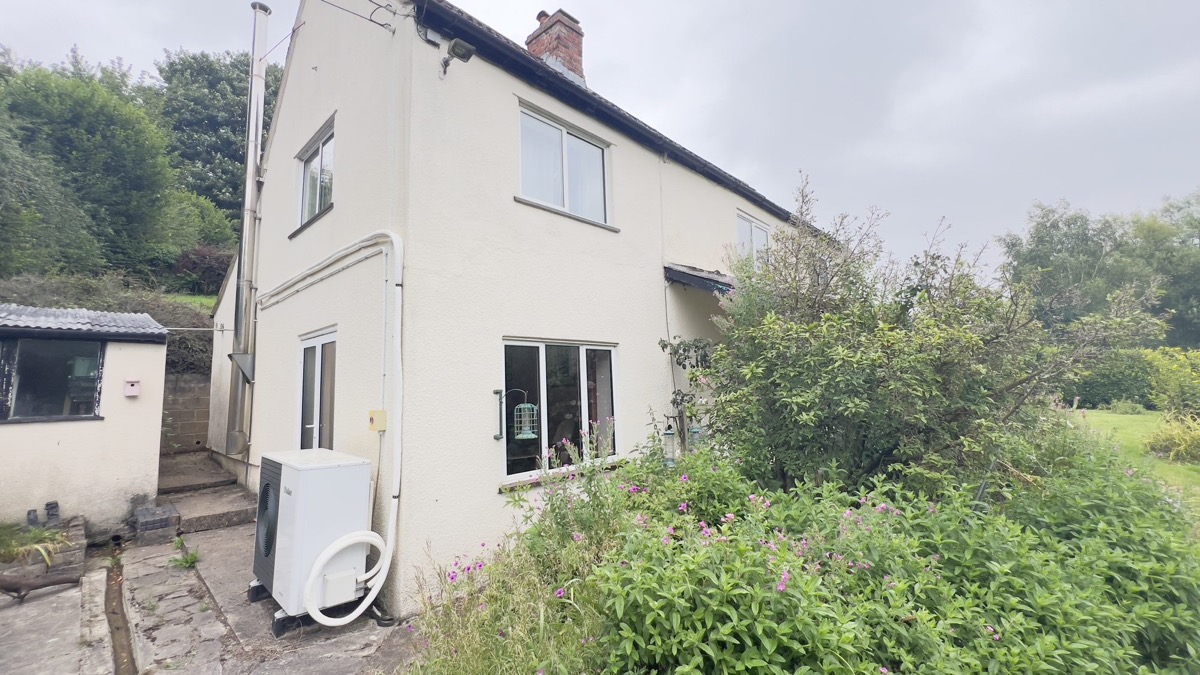
The gable. Heat pump, cables, mismatched openings — the catalogue of incremental compromises.
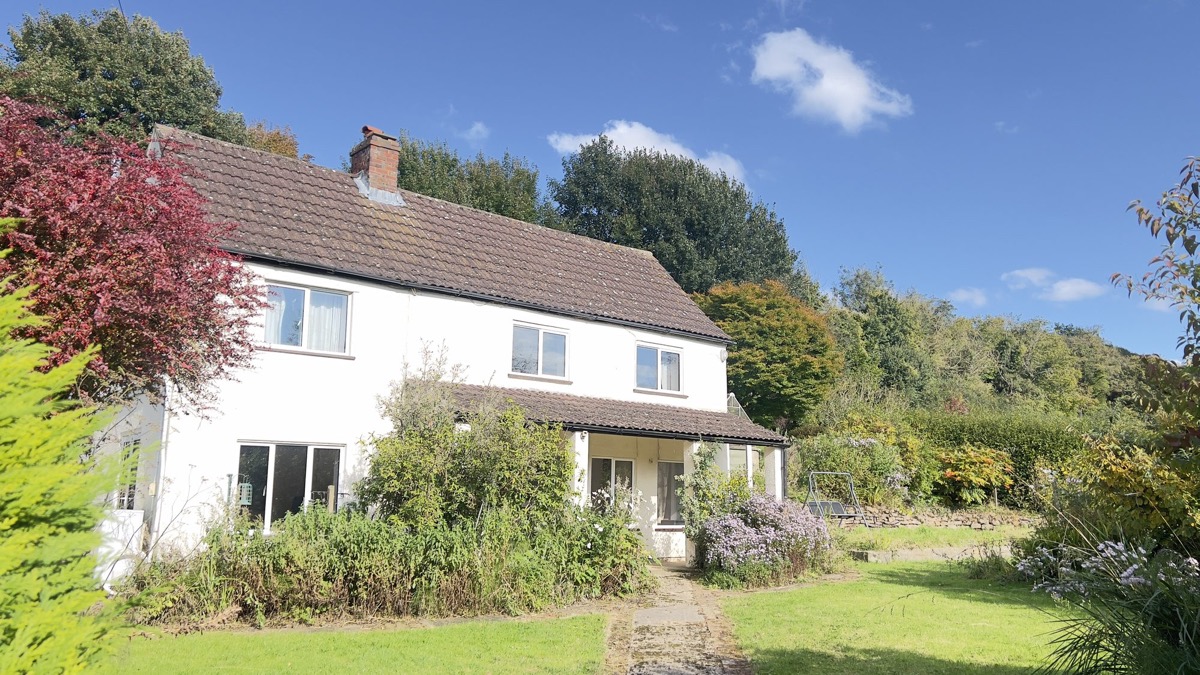
The setting that makes the site special — copper beech, mature gardens, the wooded hillside above.
The Response
Two volumes. One quietly remade, the other clearly new.
The proposed scheme reads as two volumes. The original cottage retained, but quietly recast: stripped of its added-on conservatory, services rerouted out of view, openings rationalised, and the painted render replaced with a quieter dark vertical timber cladding that lets the existing pitched roof and chimney still do their work. It still reads as the original cottage. It just stops apologising for itself.
Beside it, separated by a glazed link, sits a new wing — and this is where the design takes a clearly contemporary line. A simpler bar, also single-pitched, but under a standing-seam metal roof and sitting on a brick or stone base. Full-height glazing turns the whole south face of the new wing into a connection to the garden. A covered terrace runs the length of it, framed by columns and a deep eaves. The glazed link between old and new is the move conservation officers tend to like: new and old read as separate buildings, joined by a junction that is itself almost transparent, so neither dominates the other.
The materials hold the composition together. Stone or brick for the base course on both volumes, dark vertical timber for the upper walls, quiet pitched roofs in slate and standing seam. A short list, repeated. Nothing fighting for attention.
Inside the new wing, the plan is the opposite of what it replaces. A single open volume containing kitchen, dining, and a generous covered terrace just outside the glazing — the room you actually want to live in on a Saturday morning. The existing cottage takes the bedrooms, the snug, and the more private parts of the brief; the new wing takes the daily life. Each volume gets to be good at what it is good at.
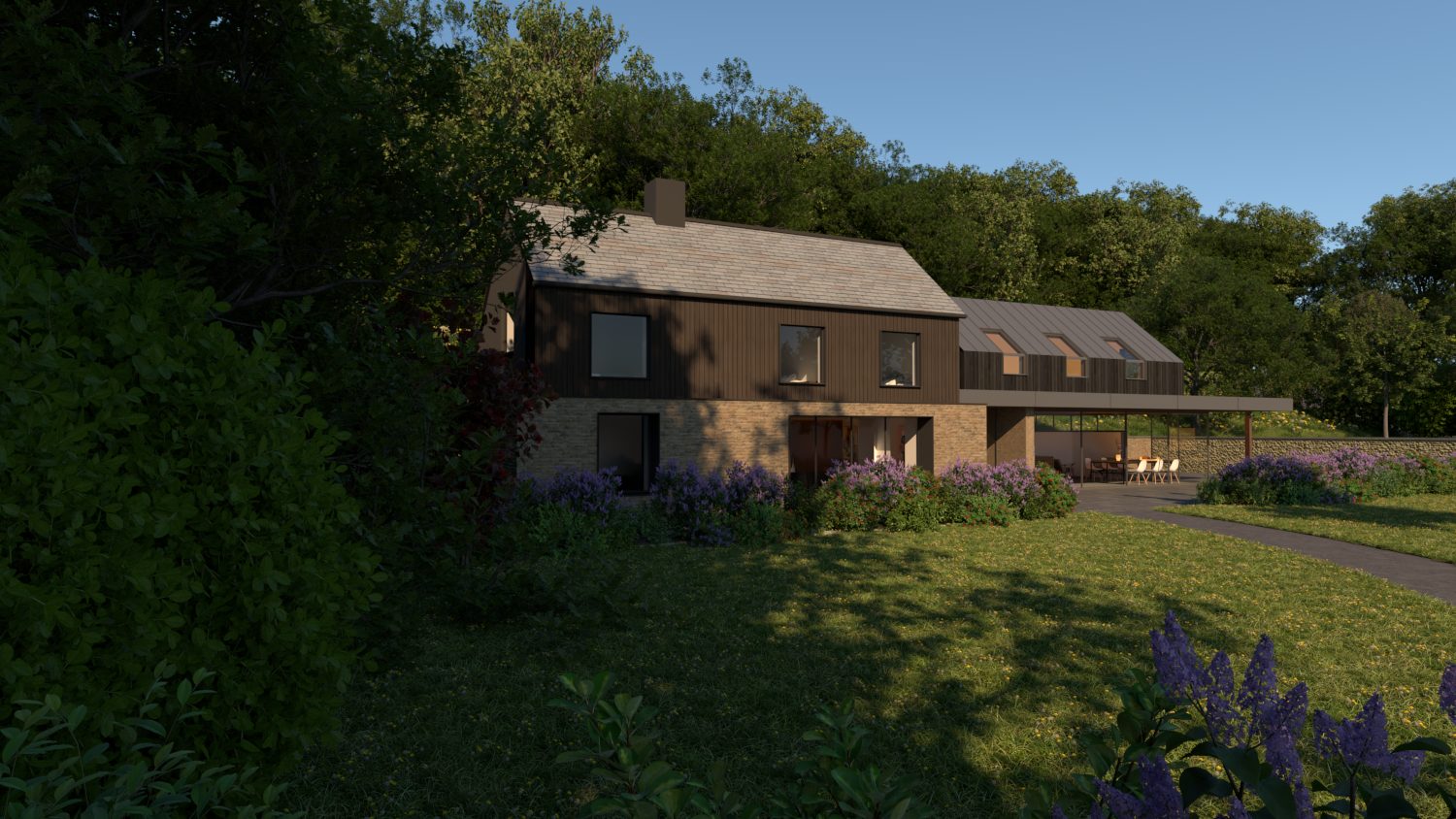
From the garden. The original cottage on the left, the new wing on the right, both speaking the same material language.
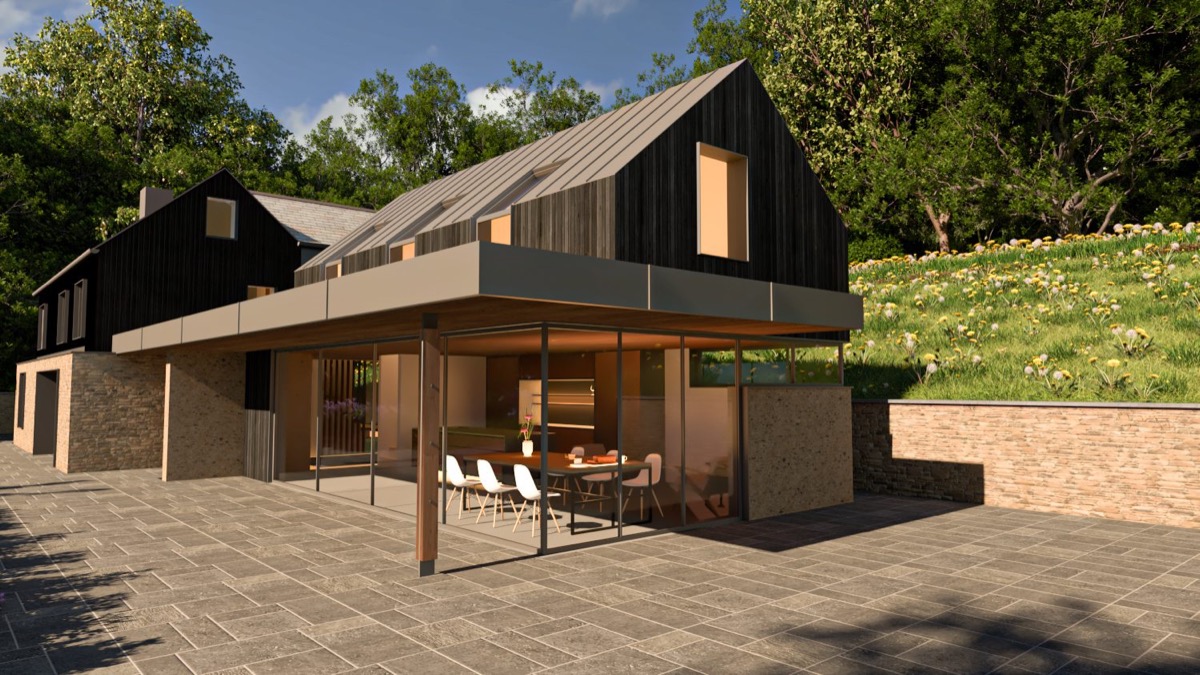
The new wing close up. Covered terrace, deep eaves, full-height glazing — the room you actually want to live in on a Saturday.

Evening. Light from the new wing washes the terrace and the lawn.
The Plan
Two diagrams. One existing, one proposed.
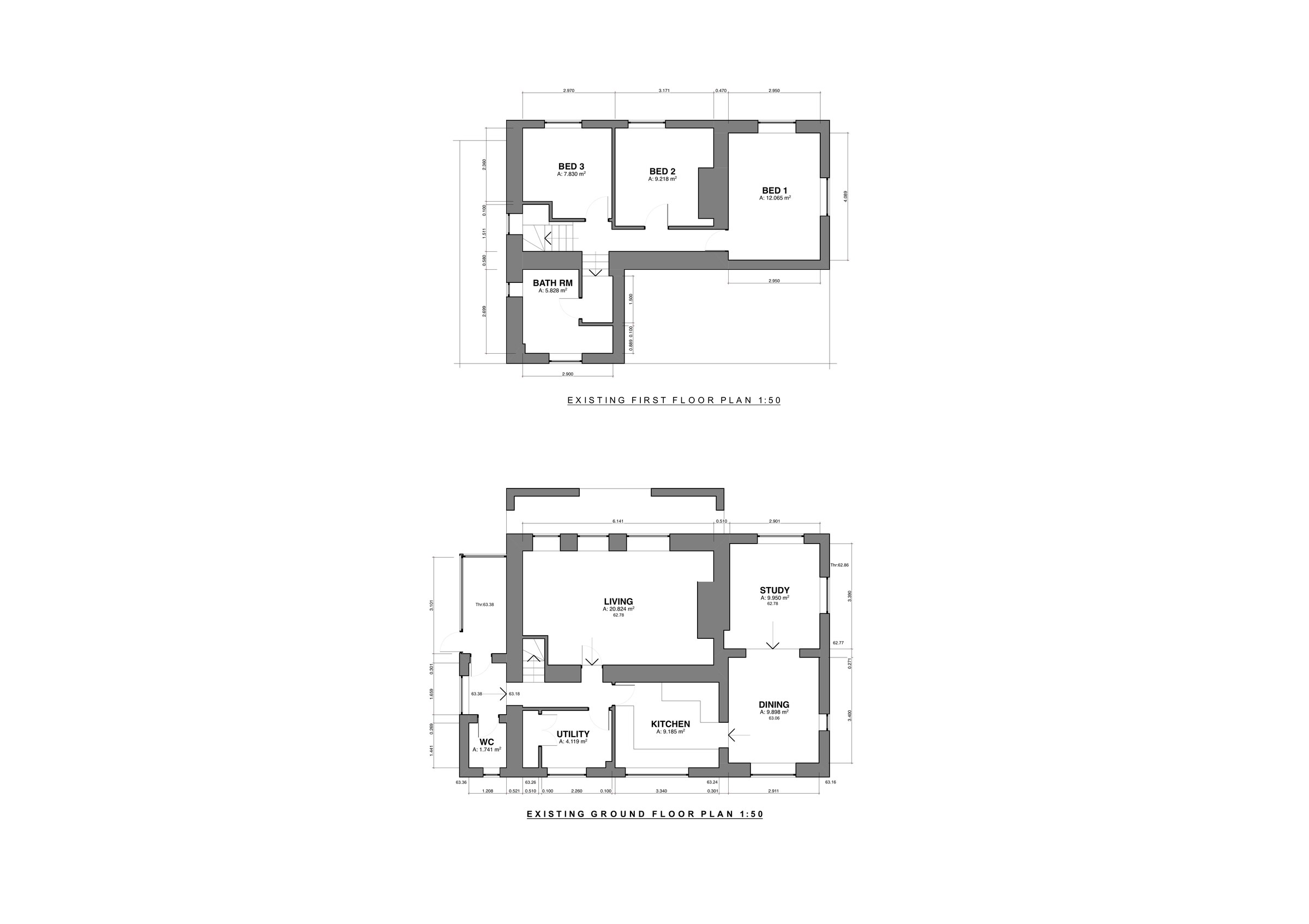
The plan is where this brief is solved. The existing cottage holds the bedrooms upstairs and a series of compartmented ground-floor rooms. The proposed scheme retains those bedrooms as a guest wing, builds a new master suite into a separate volume above the link, and gives the entire ground floor of the new wing over to a single 45 m² kitchen-dining-living space — larger than any room in the existing cottage. The diagram makes the move legible: keep what works, add new where new is honest.
Existing - Ground and first floor
Proposed - Ground and first floor

The Conservation Move
Don't dress the new work up as old.
The reason this kind of project gets through planning, on this kind of site, is restraint. The original cottage is allowed to remain the older building — slightly recast, but legible. The new wing is allowed to be obviously new — same family of materials, but no pretence of antiquity. The link between them is the device that does most of the work: glazed, low, deferential, and clearly the youngest thing on the site.
This is the logic that a degree in architectural conservation teaches you to apply. Adapting an existing building for new use does not mean dressing the new work up as old. It means being clear about which is which, and resolving the join with care. The same approach runs through every listed-building project the practice takes on.
How It Would Feel
Two buildings, two roles, one house.
The full-glazed dining wing is the room that decides this brief. On a clear evening, the light from inside washes out across the terrace and the lawn. On a summer afternoon, the covered terrace gives shade without closing the room off from the garden. In winter, the deep glazing and the orientation pull as much of the low southern sun as the site offers. The original cottage carries the rest of the life of the house, with the additions cleared away and its bones revealed.

Side angle. Timber, stone, glass — a short list of materials, repeated.
The careful adaptation of an existing building, paired with a new addition that respects it without imitating it.
This is what the practice does most often, and what it does best. If you have a house that is almost right, but isn't quite working, the same approach applies.