
Grade II listed · Cotswolds · Completed June 2020
A glass extension and a rebuilt heart for a former Cotswold pub.
Foresters Arms, near Thrupp, Stroud. The first time I visited, I had to squeeze into the existing porch alongside the client and her dogs before popping out into a dark, low-ceilinged dining room. Today the same threshold is a glass-roofed link, the dining room is open to the kitchen, and the house finally works the way the client wanted to live in it.
Status
Completed June 2020
Brief
Replace the cramped porch, open the dining room to the kitchen, and create a lighter entrance that respects the Grade II listed building.
Location
Claypits, Nr Thrupp, Stroud
Materials
Glazed link, original Cotswold stone and retained timber structure.
The Story
Listed buildings live or die in the conservation officer's office.
The house had everything most people want from a Cotswold cottage and almost none of what makes a house comfortable to live in today. Stone walls, low beams, history — all good. But also: a tight porch you couldn't stand up properly in, a dark dining room you arrived in directly from the front door, and a kitchen behind a partition wall that meant the people cooking and the people eating couldn't see each other.
Listing complicates everything. You can't simply remove a wall, and you certainly can't bolt on a contemporary extension without careful argument. Most projects on listed buildings live or die in the conservation officer's office.
I've worked with the appointed conservation officer on several projects and we know each other's standards well. We met informally at the pre-application stage and walked the building together, agreeing the principles of the design before any formal submission. By the time the listed building consent and planning applications went in, they were already supported in spirit; the formal process was a confirmation, not a fight.
The new extension is a glazed link, not a glassy box. It reads as a lighter, modern element clearly distinct from the original stone — which is exactly what listed building consent looks for. Internally, the partition between dining and kitchen came out, opening the heart of the house to itself for the first time in its history.
I oversaw the build alongside the main contractor, with site meetings with the conservation officer at key stages. The client was very happy with the result; I was invited to her wedding reception, held at the house, on a lovely summer day.
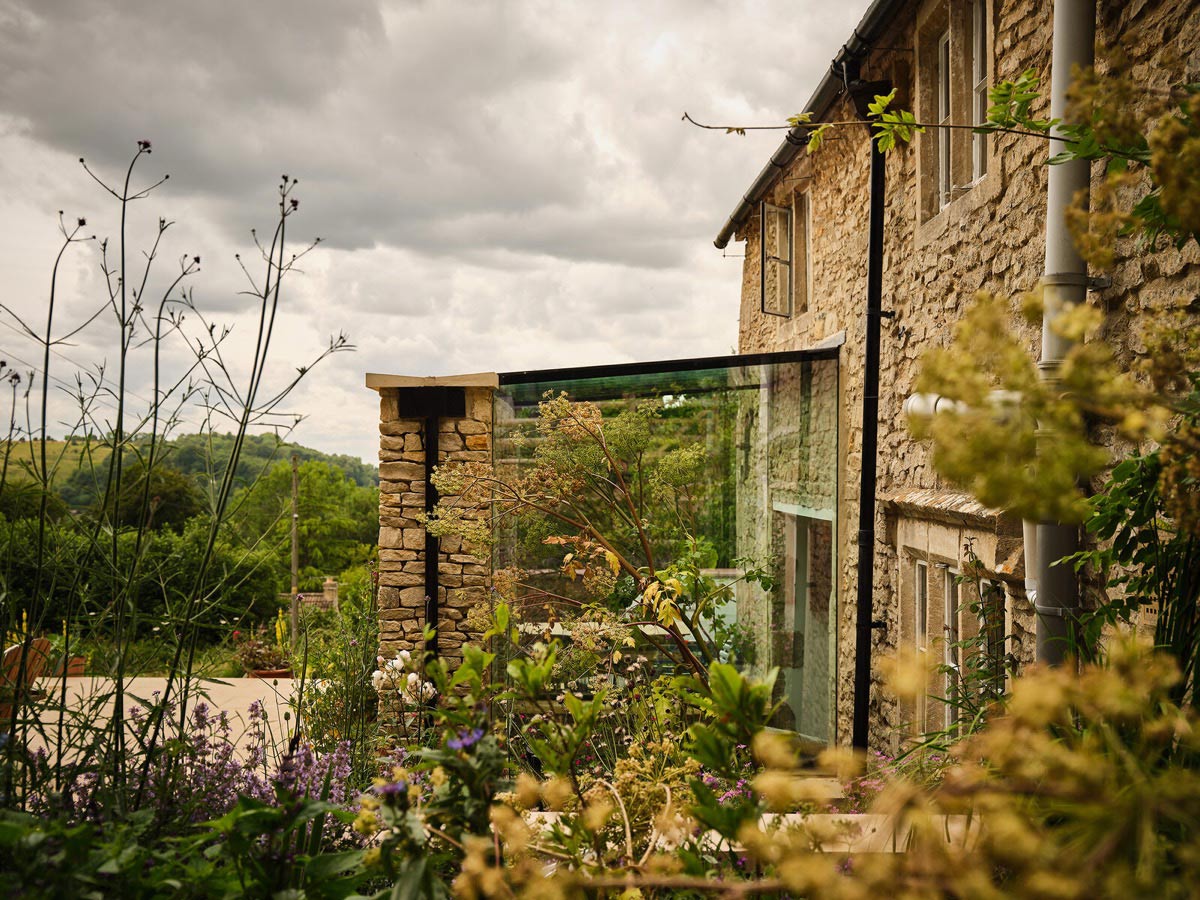
The cottage from the garden, with the new glazed extension visible to the left of the original stone elevation.
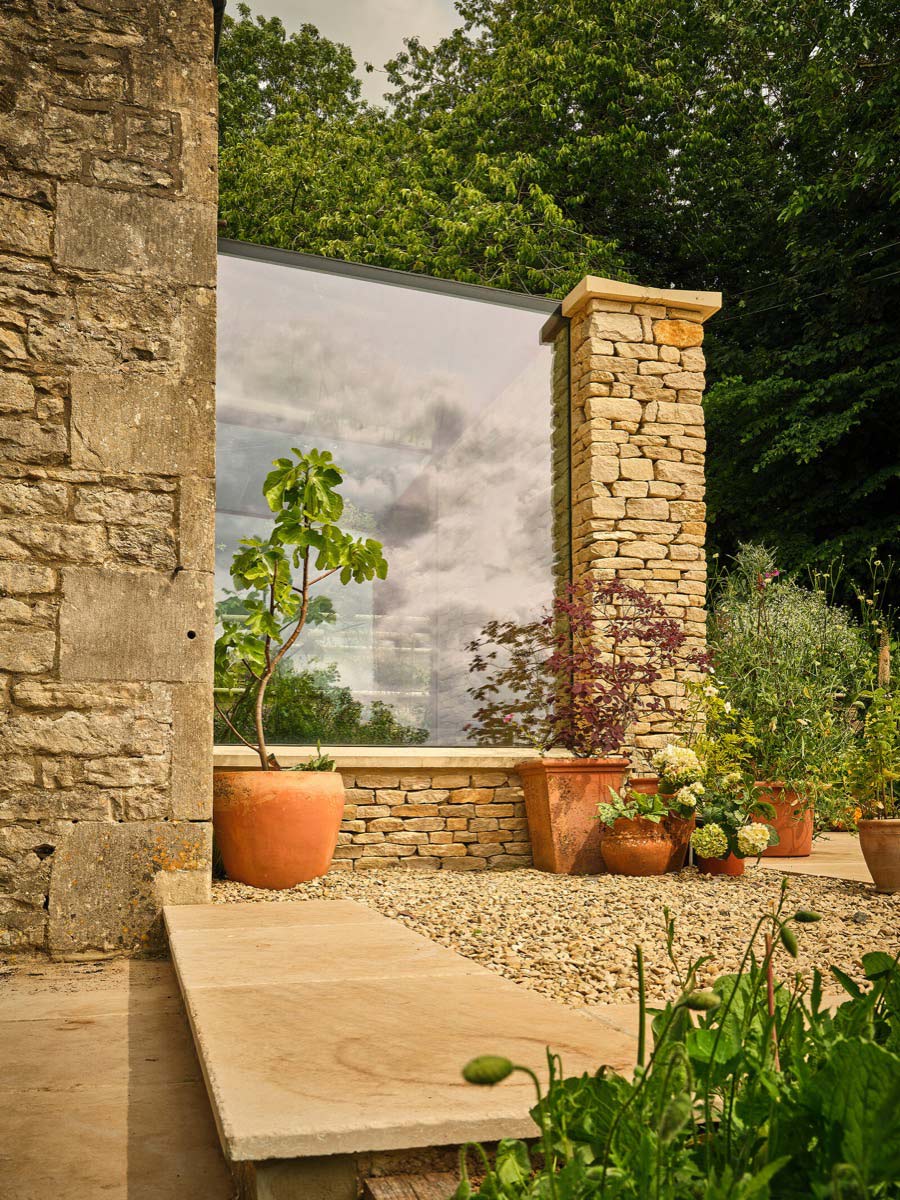
The new threshold — a courtyard moment that replaces the old, cramped porch.
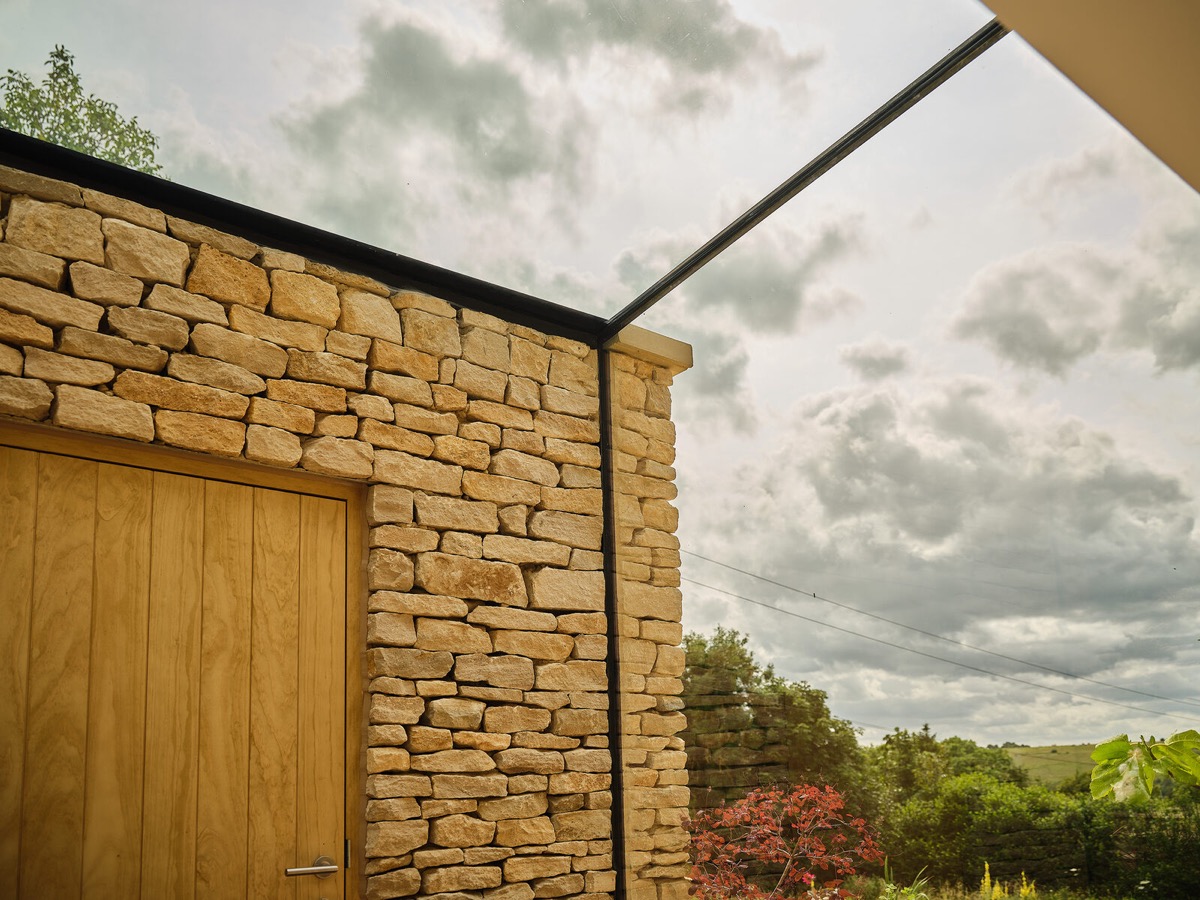
Glazed roof meeting the original stone wall. The contrast between old and new is deliberately legible.
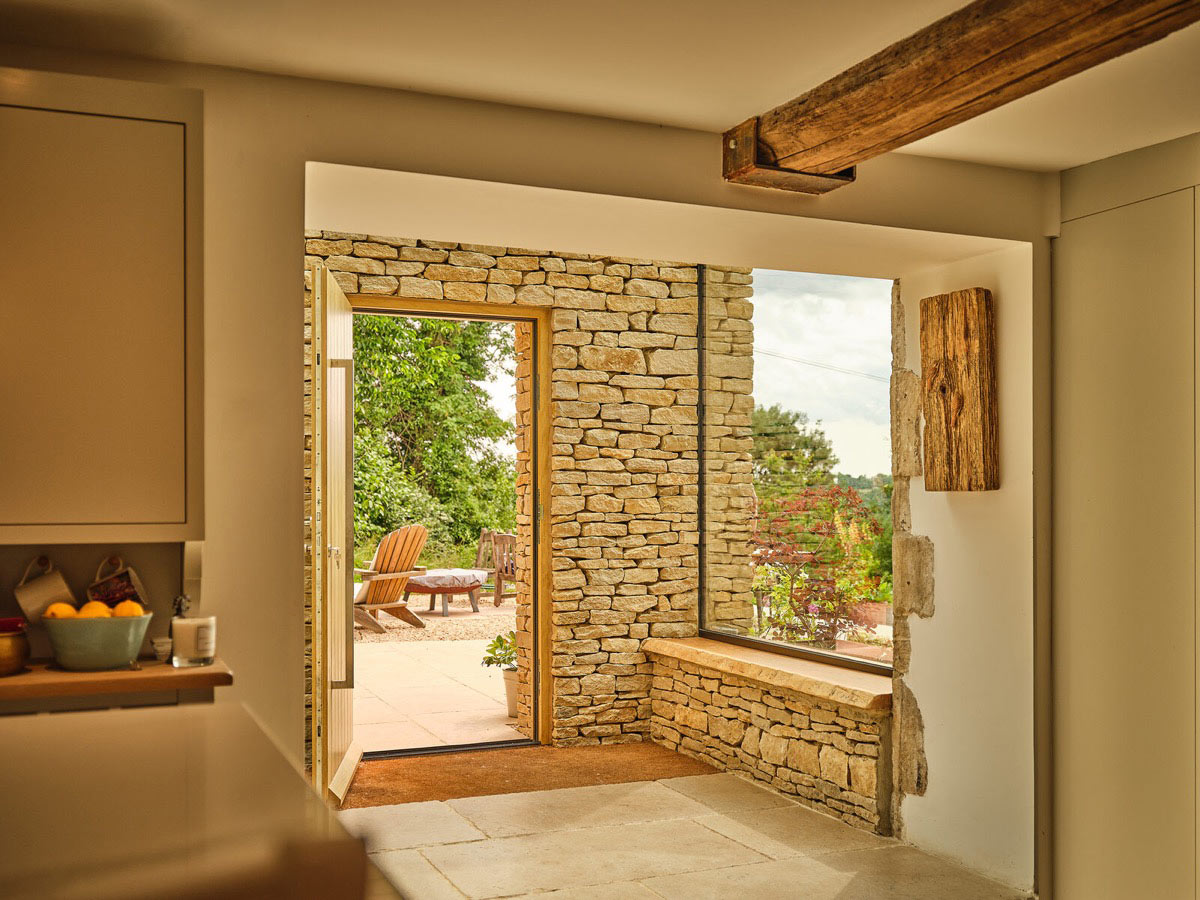
Looking from the entry through the link into the rest of the house.
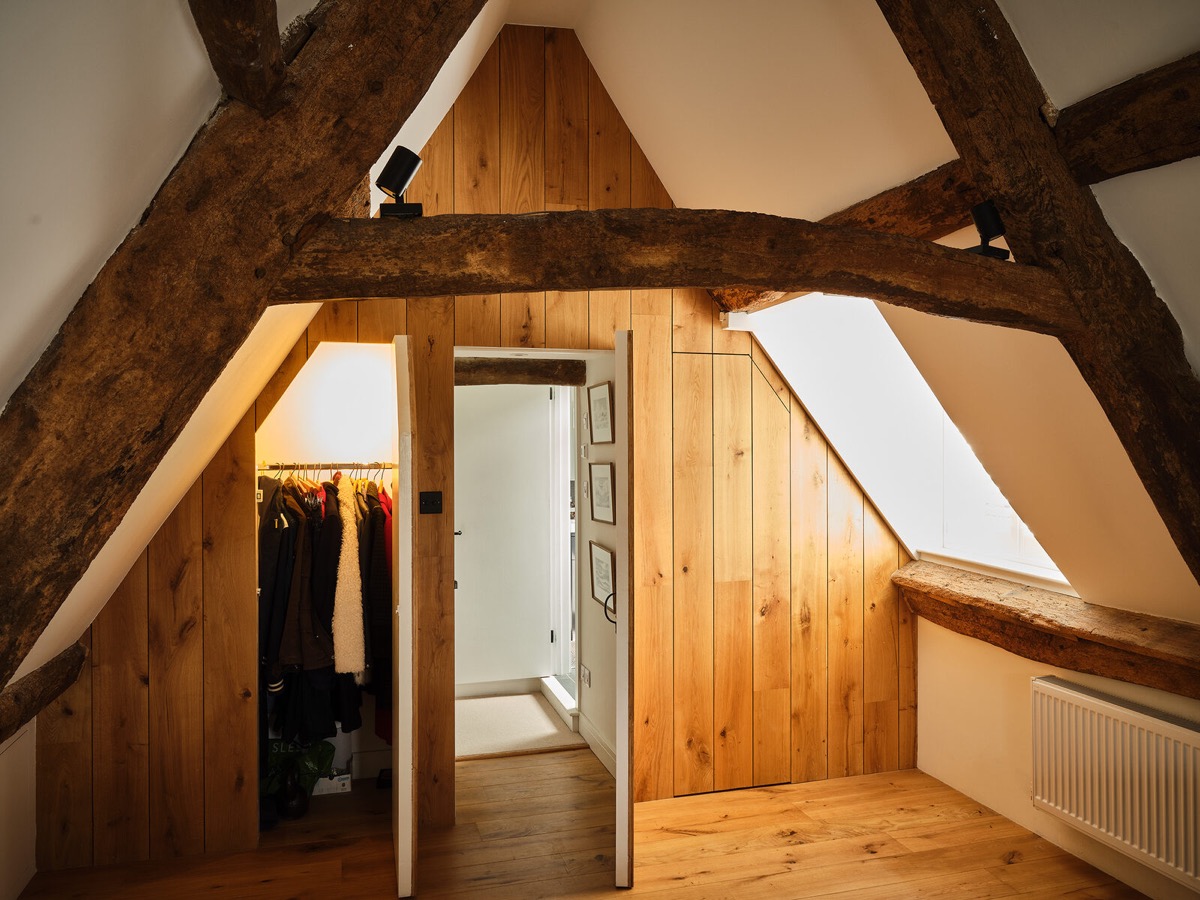
Upstairs — original timber roof structure retained and made the feature of the room.
Collaboration
Listed building consent in conversation, not confrontation.
The conservation officer's relationship with this practice is now one of its quietest assets. Several projects across Stroud District have benefitted from being able to walk the building together at the pre-application stage and agree the design language before formal submission.