
Grade II listed · Cotswolds · Completed 2024
Converting a poorly insulated rear extension into the room the house was missing.
Merton Cottage is a Grade II listed cottage with a rear extension that had outlived its use — under-insulated, architecturally weak, and mostly used for storage. Our client wanted a proper connection to the garden. We took the old extension off and replaced it with a light-filled kitchen and dining room, raised on a deck and supported on exposed steelwork.
Status
Completed 2024
Brief
Replace the poorly insulated rear extension with a light-filled kitchen and dining room connected directly to the garden.
Location
Cotswolds
Materials
Timber frame, large-format glazing, exposed steelwork and timber decking.
The Story
A lighter touch, where the conservation officer agrees up front.
The starting point at Merton was a rear extension that nobody disagreed had to go. It was poorly insulated, unloved, and mostly used for storing things the household didn't really need. The cottage itself — Grade II listed — was lovely; it just didn't connect to its garden in any meaningful way.
The client's brief was direct: she wanted a place to live, cook, and eat that opened to the garden. Once we'd looked at the building together, the answer was a careful, light-touch replacement of the existing rear extension — not a bigger one, not a louder one, just a much better one.
Listed building consent for visible interventions on Grade II buildings stands or falls on the pre-application conversation. The conservation officer here is one I've worked with several times. We met on site early, walked through the proposal in principle, and agreed the design language before anything went in formally. By the time the listed building consent and planning applications were submitted, they were already understood and supported.
The new extension is timber-framed with heavy glazing on the garden side, raised slightly above the lawn so a deck steps out into the planting. The deck is held up on exposed steelwork — a deliberate, structurally honest detail that makes the lightness of the whole thing visible. At dusk, with the lights on inside and the timber frame glowing through the glass, it's everything the client asked for and more.
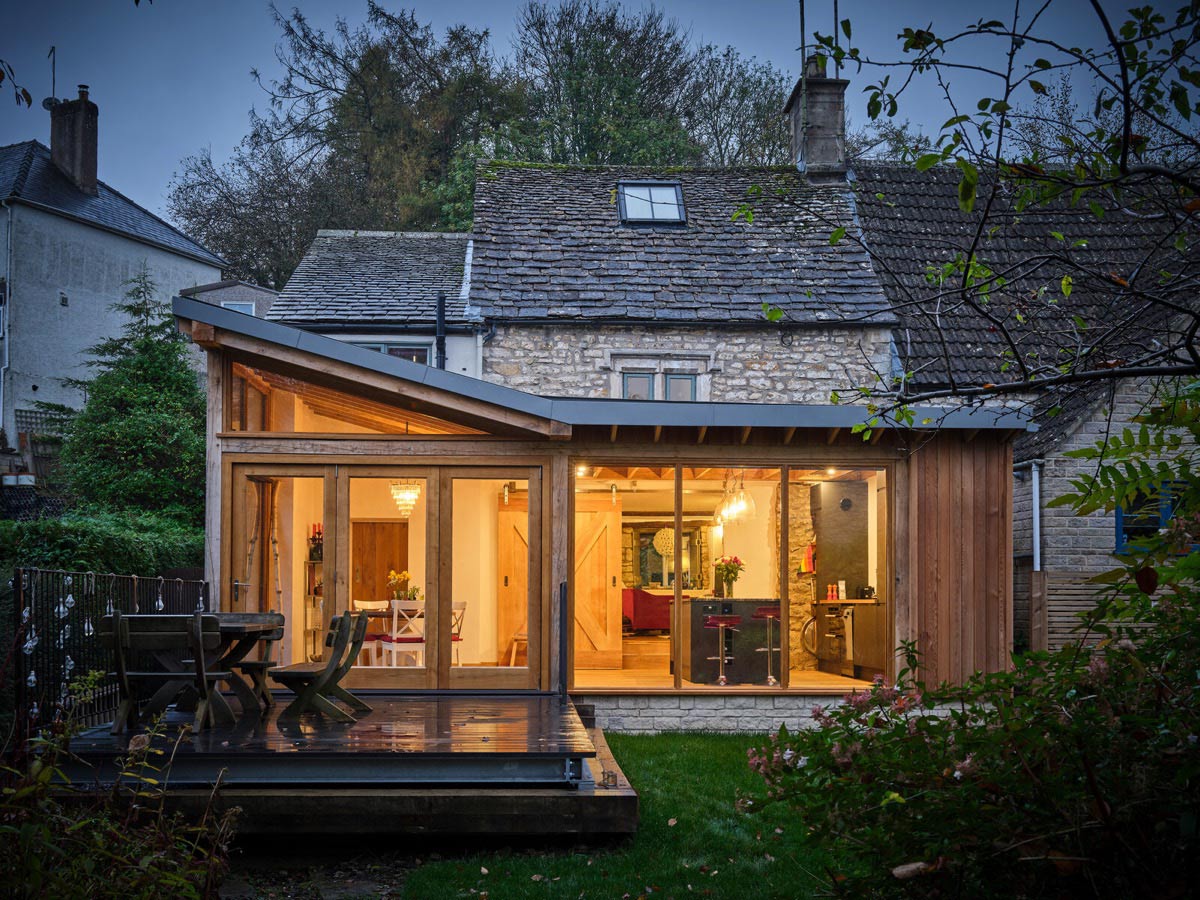
Daytime: the timber addition reads as a clearly modern element distinct from the original cottage.

The exposed timber frame in detail. Structurally honest, materially calm.

The kitchen-diner from inside, the timber roof structure expressed across the room.

The garden-facing wall, almost entirely glass, opening the room to the planting.
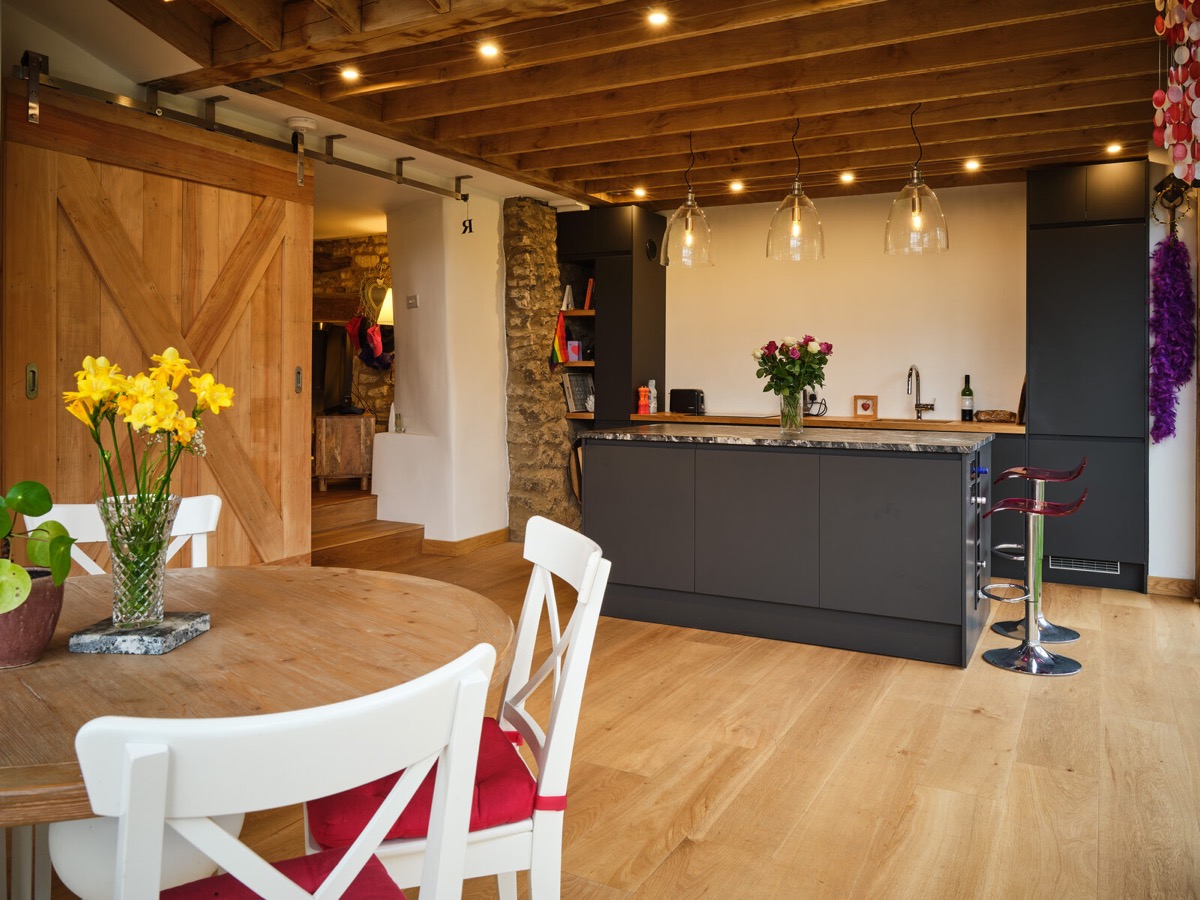
A detail of the joinery and dining setup. Daffodils for scale.
On listed buildings, the architecture is half the project. The other half is the conservation conversation.
We do both.